Fencing
The history and physics behind the sport of fencing.
Site made by Sofia Khan (AP Physics 1 Block 7)
Introduction
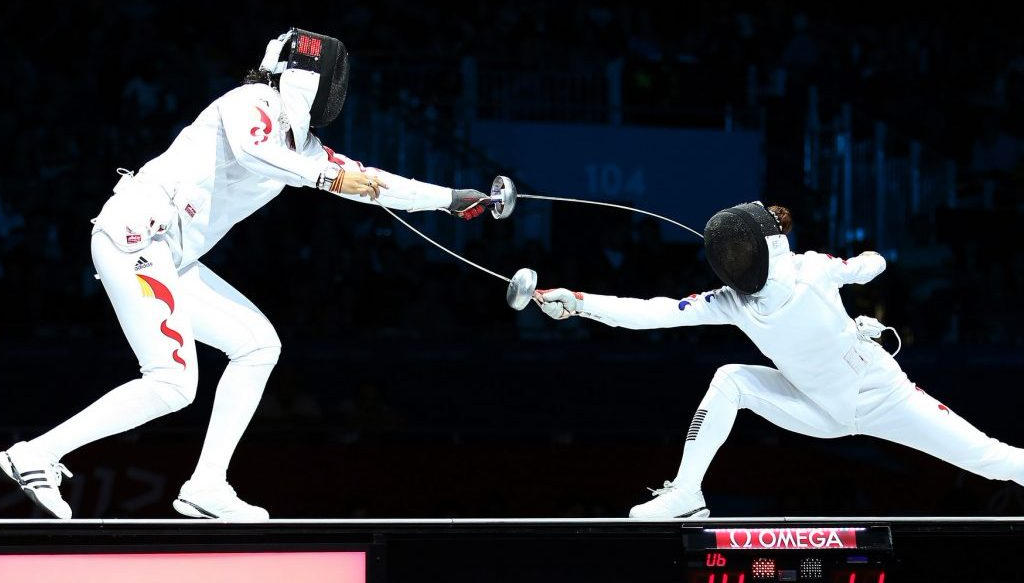
Fencing is an umbrella term for a group of three related combat sports based on swordsmanship: the foil, the épée, and the sabre. Each form are played with different types of swords and rules. Winning points are made by contact with the opponent.
History
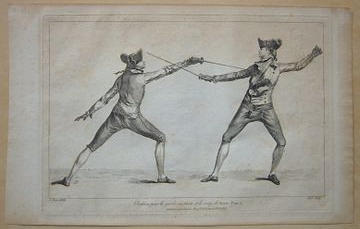
Fencing is believed to begin in Spain, and in conquest, Spanish forces carried fencing around the world.
The mechanics of fencing originated in the 18th century in an Italian school of fencing. Fencing began to shift from military training to a sport in the mid-18th century, led by Domenico Angelo. He taught aristocracy swordsmanship and established the footwork and posture of fencing.
The first fencing competition was held at the inaugural Grand Military Tournament and Assault at Arms at the Royal Agricultural Hall in Islington, London on June 1880. This event displayed competitions between army officers and soldiers. The Amateur Gymnastic and Fencing Association created an official set of fencing rules and regulations in 1896.
Equipment
Fencing equipment includes 2 swords, a Lamé (except for épée), a white jacket, two body and mask cords, and protective equipment.
There are three weapons in fencing with its own rules and strategies:
Foil: a light thrusting weapon with a maximum weight of 500 grams. It targets the torso, not arms or legs. Touches are only scored with the tip.Épée: a heavier thrusting weapon with a maximum weight of 775 grams. The entire body is targeted. Touches are also only scored with the tip.Sabre: a light cutting and thrusting weapon with a maximum weight of 500 grams. It targets the body above the waist except the hand. Hits with the entire blade or point are valid.
Protective equipment is made out of tough cotton or nylon. The set of protective equipment includes:
Jacket: form-fitting with a strap (croissard) that passes between the legs.Plastron: underarm protector worn underneath the jacket.Glove: protects the sword hand with a gauntlet that prevents blades from going up the sleeve and improves grip.Breeches (Knickers): short pants that end below the knee.Socks: to cover the knee.Shoes: flat soles, reinforced on the inside and in the heel.Mask: a bib that protects the neck, supports 12 kilograms on the metal mesh and 350 newtons of penetration resistance on the bib.Chest protector: made of plastic, worn by female fencers and occasionally boys. Fencing instructors wear them.Lamé: a layer of electrically conductive material worn over the jacket in foil and sabre fencing.Sleeve: protects an instructor's arm; an instructor may also wear a leg leather to protect their leg.
Rules
Before a fencing match, the fencers, wearing all of their equipment except the mask, must salute each other and the referee.
After the salutes, the referee calls, “En garde!” The fencers put on their masks and take the on-guard (en garde) position behind the en-garde line. The referee calls, “Play!” or “Fence!” and the bout starts.
The bout is called a phrase, which is an unbroken chain of offensive and defensive actions by both players. The phrase ends when the referee has a reason to do so. Reasons the referee may end a phrase is physical contact, a hit, a penalty, or when both players return to passivity.
The referee calls, “Halt!” to interrupt the bout. If a point is made, the players return to their en-garde lines. If not, they remain where they were when the bout was interrupted. If they must establish correct distance, both players straighten their arms and step back until their blades do not appear to overlap in the referee’s vision. If a player needs to adjust their gear, they tap their back foot or wave their back hand for the referee to call a halt.
This is repeated until one of the fencers reach the required number of points or time runs out. Each bout must stop after three or nine minutes of fencing, depending on the required number of points. If there is a tie, the director randomly chooses which fencer has priority, and the fencers bout for another minute. If a point is scored, that fencer wins. If not, the fencer with priority wins.
There are also penalty cards. A yellow card is a warning, a red card is a touch awarded to the opponent, and a black card removes the fencer from the competition. Spectators may also be carded or expelled. Offenses are categorized:
Group 1: bodily contact with the opposing fencer, delaying the bout, or removing equipment. This results in a yellow card, and subsequent offenders get a red card.Group 2: violent actions, or lack of proper inspection marks on equipment. This results in a red card.Group 3: disturbing order or purposely altering inspection marks. This results in a red card, and subsequent offenders get a black card.Group 4: doping, cheating, or other breaches of protocol. This results in a black card.
Physics
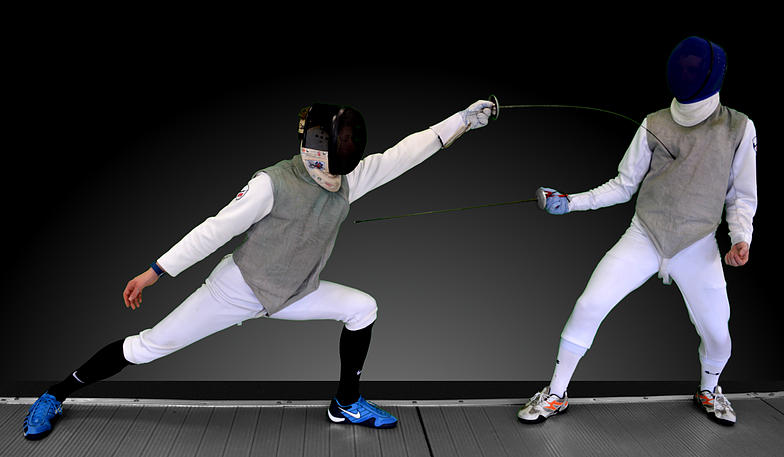
This specific move is called the Lunge.
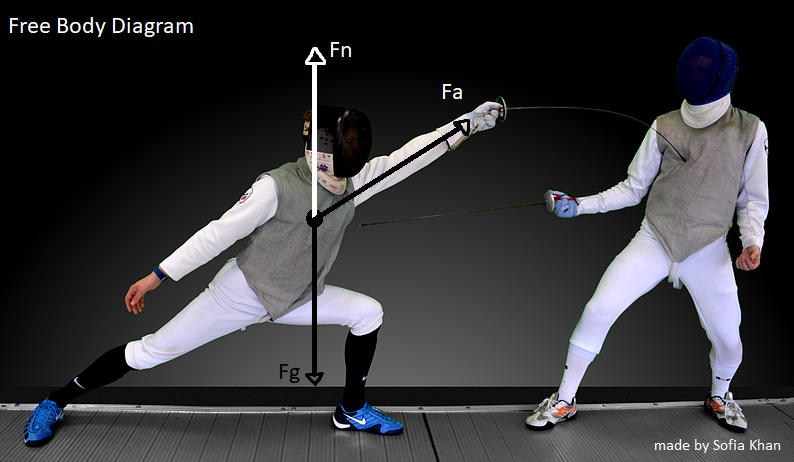
Fencing represents the Law of Conservation of Energy, because before the lunge, there is the most potential energy. Once the player begins to lunge, the potential energy converts into kinetic energy. The player has the most kinetic energy in the middle of the lunge, and this energy is equal to its original potential energy. Thus, energy is conserved.
Sources
https://www.pinterest.com/melonarium/fencing/
https://www.fencing.net/16585/fie-test-epee-non-combativity-rule-changes/
https://en.wikipedia.org/wiki/Fencing
https://en.wikipedia.org/wiki/Piste_(fencing))
https://en.wikipedia.org/wiki/Fencing_practice_and_techniques
http://www.gafencingac.com/?lightbox=image_kam